
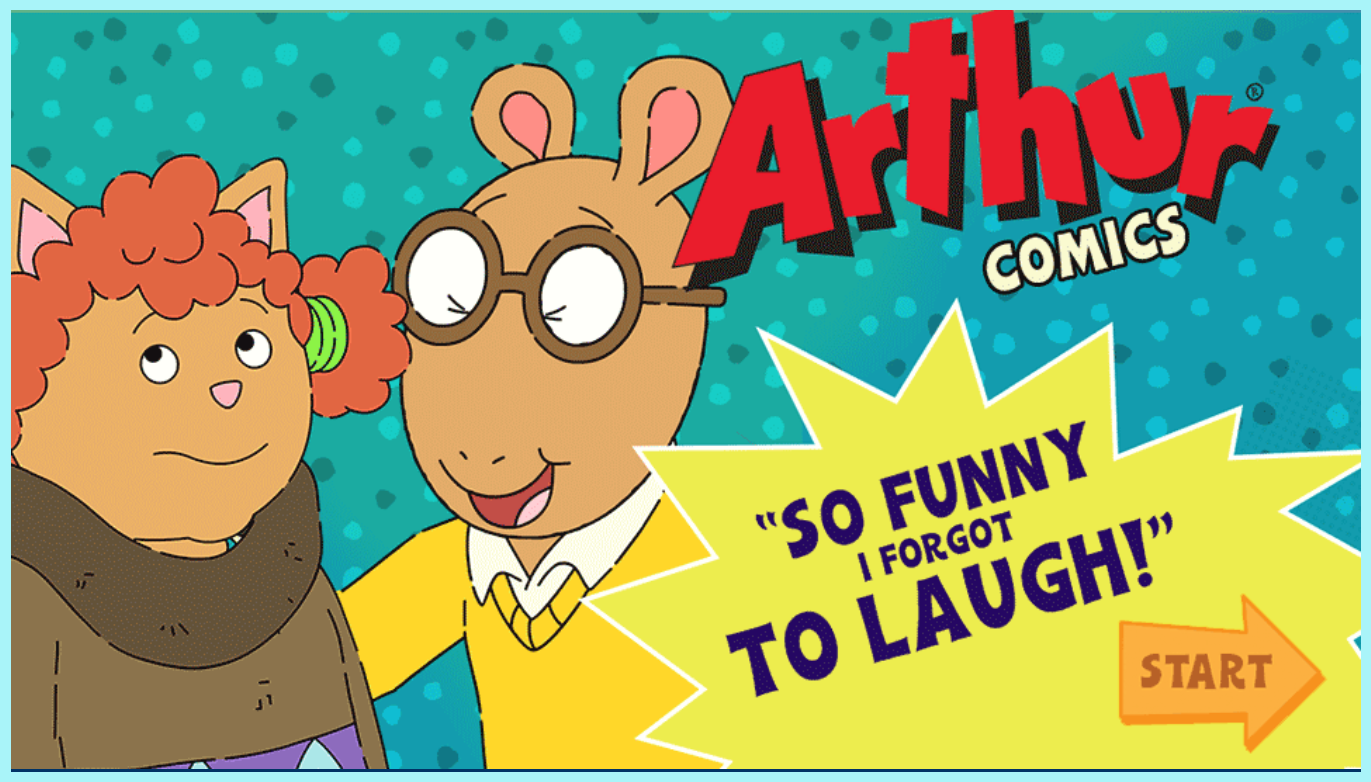
All too often, school is seen as a conduit for knowledge surrounding the academic subjects and does not address the other developmental needs of children. Researchers from Clemson University and Tufts University decided to investigate if character development skills and awareness, including values like “empathy, forgiveness, generosity, honesty, and learning from others”, could be presented to children through technology. Using the familiar cartoon of Arthur by PBS, the research team developed an online module, the Arthur Interactive Media (AIM), to attempt to teach students about the aforementioned character traits. Through a variety of measurements, including teacher satisfaction, student engagement, and depth of peer-to-peer conversation, the research team deemed that AIM was highly successful in teaching and encouraging critical thinking around “prosocial behavior”, including the aforementioned values. The study’s original paper focuses primarily on “humility, future-mindedness, and forgiveness”, and saw great success in all categories. Integral to this entire process were the “cross-age peer dyads”, or the pairings of first and fourth graders and second and fifth graders. This allowed the students to learn and engage with one another, which both bolstered their development of social skills and their comfort in discussing the module content. As one of the teachers pointed out in the AIM videos, students are often much more comfortable and feel more secure talking to their peers, so in turn, they are more open to learning and sharing.
The videos addressed many of the same concepts presented in the AIM Study, but there were a few subliminal notes that the videos portrayed: one of the impacts of this program outside of the individual character development was the fostering of bonds between the students and their older/younger peers. This allowed the students to create another social bond with individuals who they would likely not have connected with otherwise; this teaches the students a new level of social skills while also providing another resource where they feel safe discussing how they feel. When you interact with the Arthur learning module directly, the level of care that the researchers took to develop each possible storyline to allow students to see the implication of each decision. Seeing what each character is thinking in addition to what they are saying and their actions also presents the students with the awareness that they must analyze their peers’ behaviors past what they say and do; this is a level of social development and understanding that is rarely taught to young children, and is, therefore, lacking in early social interactions.
Unfortunately, my elementary school did not have this level of social-emotional learning (SEL). We had an upper-lower grade buddy system, but our interactions were mostly focused on reading levels: at the time, API was very important across the school districts, and reading levels for students accounted for a good percentage of that score. Now, when I return to my elementary school to volunteer in the classrooms, I am able to witness SEL strategies like restorative circles at work. As a result, I have been able to observe the students communicating and facilitating interactions around their feelings with ease that far surpasses what I remember about my elementary school experience. Programs like AIM excite me because of their SEL themes and their simultaneous use of technology: our students are exposed to technology inside and outside of the classroom more than ever, and their learning styles reflect these influences. Not only does AIM allow the students to engage with technology more, but it also allows them to hone their skills and troubleshooting measures when it comes to working with computers. This will only make them better suited for the next stages of their life; in this way, programs like AIM builds both social and technological toolboxes for our young students.
I would pose the following question to my peers: what other shows or familiar sets of characters could be used to promote SEL among young students? Or, what could be used for students in 6th, 7th, 8th, or 9th grade who have outgrown Arthur? Is it important to continue this type of education past the early grades?
 Emily's Blog