As I discussed last week, there are multiple educational opportunities lying within “Forge of Empires”. Though not traditional in the sense of explicit teaching, “Forge of Empires” allows students to experience the nuances and progression of evolving empires throughout time. This break from classic teaching practices can be concerning to some, thus limiting the implementation of games like “Forge of Empires” in the classroom. I am not one to focus on the negative, so we can actually take this last statement and reverse it to a more positive outcome: incorporating more traditional educational elements into “Forge of Empires” may boost its attractiveness in the classroom setting. I have outlined such changes below:
1 – Take on the Role of a Specific Empire
“Forge of Empires” is built in a hypothetical world, with hypothetical empires, hypothetical rulers, but very real history. One of the easiest and most beneficial ways to add more explicit educational content is to simply transition away from fiction: stop imitating history, become history. Instead of creating “an empire” in “a world”, have users choose to be Mongolians, Spartans, Babylonians, Byzantines, French in the time of Napoleon, or something similar! Allow students to act as specific rulers, in specific times. In order to maintain continuity throughout time, have students land in France before Napoleon and continue after his time in power; students will witness the same empire evolution through time while understanding explicit, fully-transferable history. Instead of battling fictional neighboring empires, battle actual enemy regions from specific time periods. Present students with the same options to fight or to trade; however, if they choose to trade, allow them to ally with these empires and realize more drastic benefits in goods, supplies, coins, and battle.
2 – Modernize and Accelerate
Two of the most prevalent questions from students are “why do I need to know this?” and “when am I ever going to use this?”. For most, ancient world history is a topic studied in 6th and 10th grade; even then, a lot of the content is consumed in a “binge and purge” method. Though games like “Forge of Empires” make the content a bit more engaging, its long and methodical approach can quickly lose students’ interests. In this way, the game may be a bit more successful if students were able to progress faster through the levels, coupled with a shortening of the number of levels. Young learners, even progressing into middle and high school, have notoriously short attention spans when the content is not actively engaging or beneficial to them. As I listen to the feedback from my peers, I find that some of them are dissuaded by the moderate pace of the game; these individuals are self-driven, aware learners who enjoy academic settings. In order for “Forge of Empires” to reach a broader and more in-depth level of classroom connectivity, it needs to progress to more modern times, technologies, and tactics to hold the attentions of students. If you cannot reach them, you cannot teach them.
Switching back to the actual gameplay for a bit, I would like to also touch on the different types of currency in the game. Balancing the different costs can be a bit tricky, especially if you avoid spending actual money.
Main Currencies: Coins, Supplies
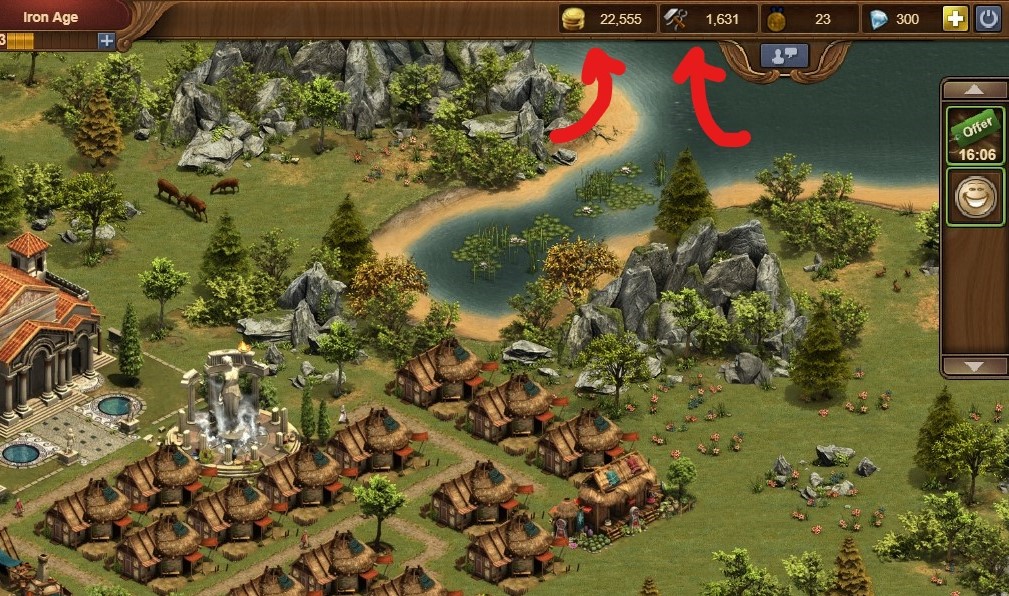
The two main currencies for building, buying, selling, etc. are coins and supplies. Each place of residence for the population produces a certain number of coins per hour or few hours. Unlike other games that allow you to collect coins at any time, “Forge of Empires” players can only collect coin in certain increments of time. These increments vary greatly depending on the type of residence, as do the number of coins produced. Residences from earlier ages produce fewer coins, but also often do not take as long to produce. Supplies are created through production facilities such as the fruit farm, pottery, and goat farm. Different, more advanced, and more efficient production buildings can be unlocked through research. The best production building of one age pales in comparison to the worst production building of the next age: the fruit farm of the Bronze Age produces 130 supplies in an hour, while the goat farm from the Iron Age produced 220 supplies in an hour. This relationship is very similar in the residence category. Both of these discrepancies force players to continually upgrade their residences and production buildings as they level up.
Subsidiary Currency: Population
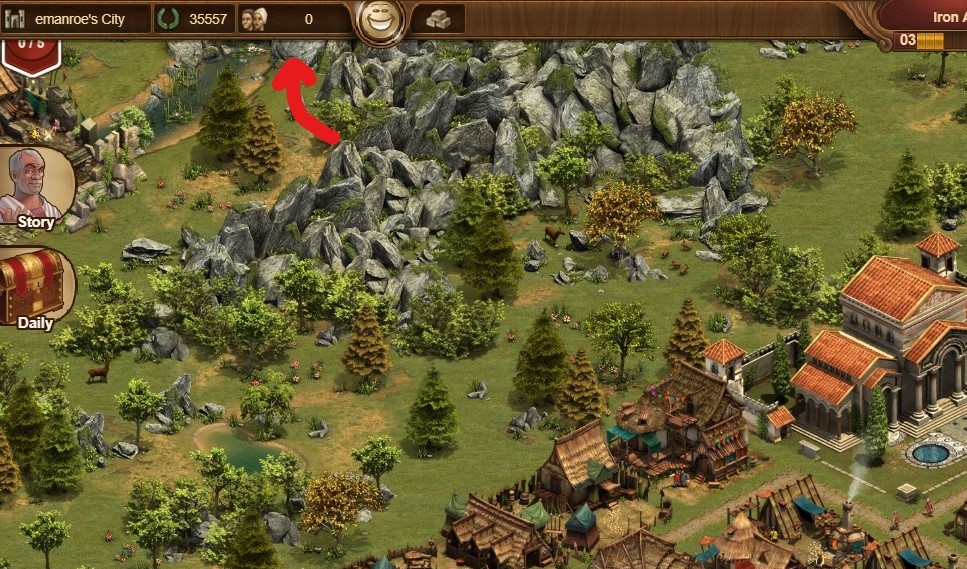
Yes, people are a form of currency in “Forge of Empires”. Allow me to explain. Players are able to increase the number of people in their empire by buying more residences. However, when users want to build production buildings, goods buildings, or military training barracks, they must sacrifice a certain number of their population to build and run that establishment. This can actually act as a large gatekeeper to progress: even if the user has enough coin, supplies, and area to build a structure, if they do not have enough people to support and maintain it, the building cannot be constructed. Opposingly, if the users sell a building, they not only gain a small percentage of coin and supplies, but also regain the population that was dedicated to running that building.
Subsidiary Currency: Diamonds
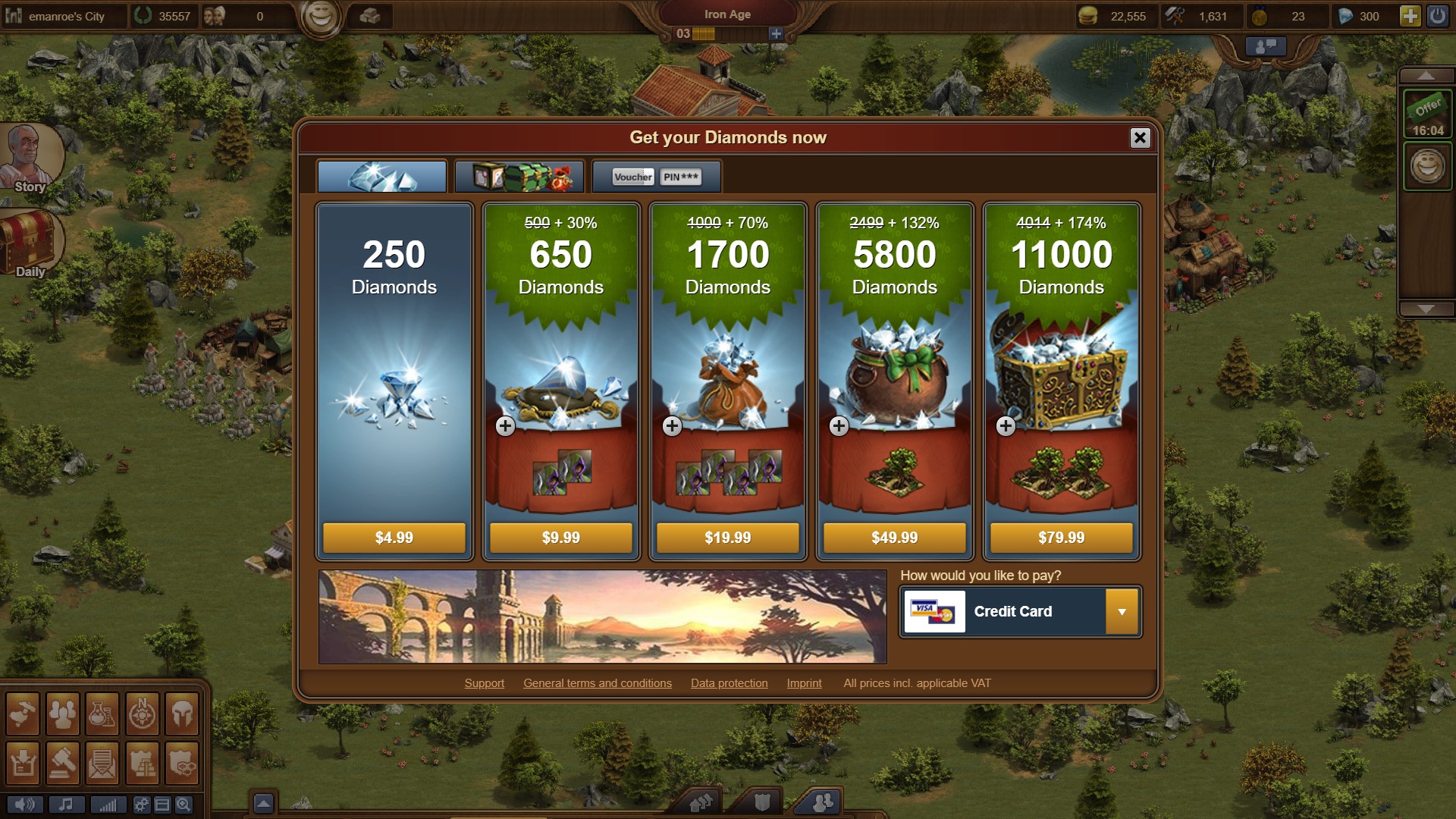
If you want to progress quickly through the game, diamonds are the way to do it. Diamonds can be substituted for any form of currency in the game (coin, supplies, goods, forge points), and even time. Sounds great, doesn’t it? Well, as long as you are willing to pay actual money to refill your diamond supply, it is wonderful. The game starts you out with 300 diamonds, which is roughly the equivalent of that age’s best building (be it a residence, production, or happiness). However, buildings are not upgradable throughout times; this means that though it is a wonderfully-advanced building in the current age, it will eventually be passed in yield by the buildings of later ages. Spend away, young emperor; but beware your credit card bill.
Subsidiary Currency: Forge Points
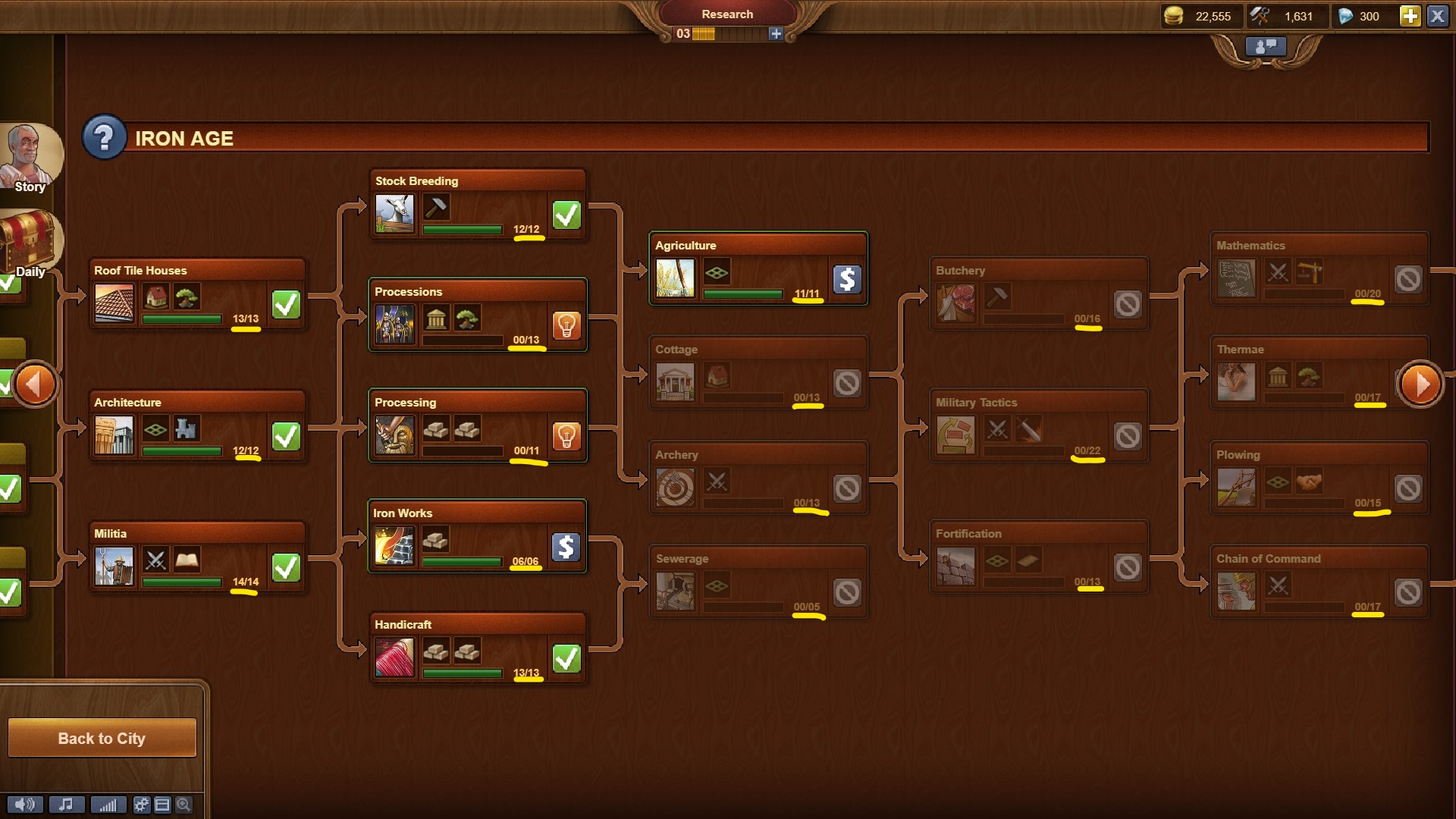
Forge points serve two purposes: research and Great Buildings. As I have discussed in previous blogs, researching allows players to discover and unlock new technology, buildings, military soldiers, abilities, area expansions, and overall progress in the game. The roles of Great Buildings are a bit less progressive: unlocked by luckily discovering various blueprints, Great Buildings grant users increased population happiness and supplies. They are also one of the few things in the game that can be leveled up: by spending Forge Points, users can unlock increased benefits. However, simply going from a level 1 Oracle of Delphi to a level 2 consumes 40 Forge Points; this only increased the Oracle’s happiness output by 70 and supply output by 310 every 24 hours. One Force Point auto-populates every hour, and the Force Point bar holds up to 10 at a time. The headquarters, starting in the Iron Age, also produces one Forge Point per day.

Subsidiary Currency: Goods
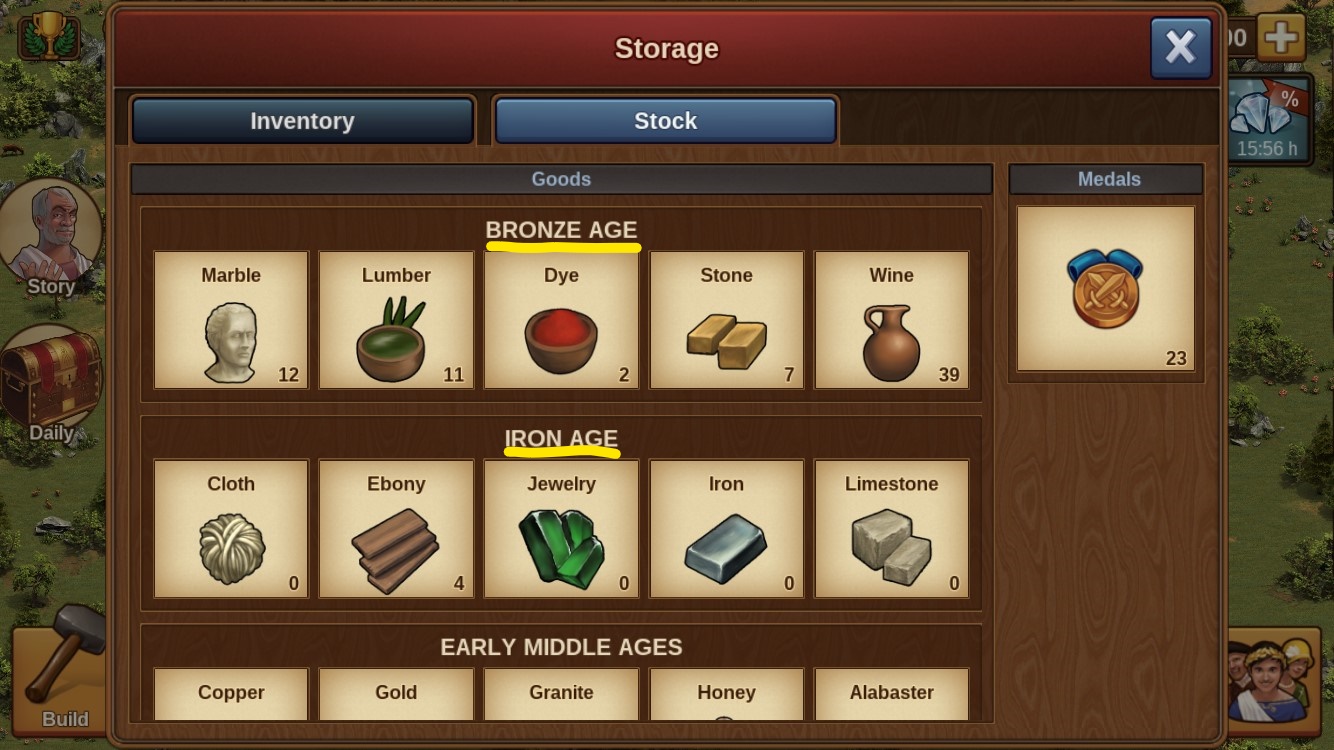
Each age has 5 specific goods that players can unlock and produce. Unlike coins and supplies, these goods do not accrue simply through time; the user has to spend coins and supplies to produce any type of good. Goods production can be boosted through conquering areas with specific advantages; for example, production of wine may increase from only 1 every 4 hours to 5 every 4 hours by winning an area on the map. Goods also compound throughout the ages; this means that though cloth, ebony, jewelry, iron, and limestone are the goods of the Iron Age, many prices also include marble, lumber, dye, stone, or wine from the Bronze Age. Players can also trade goods with other players through the market.
Subsidiary Currency: Medals, Tavern Silver
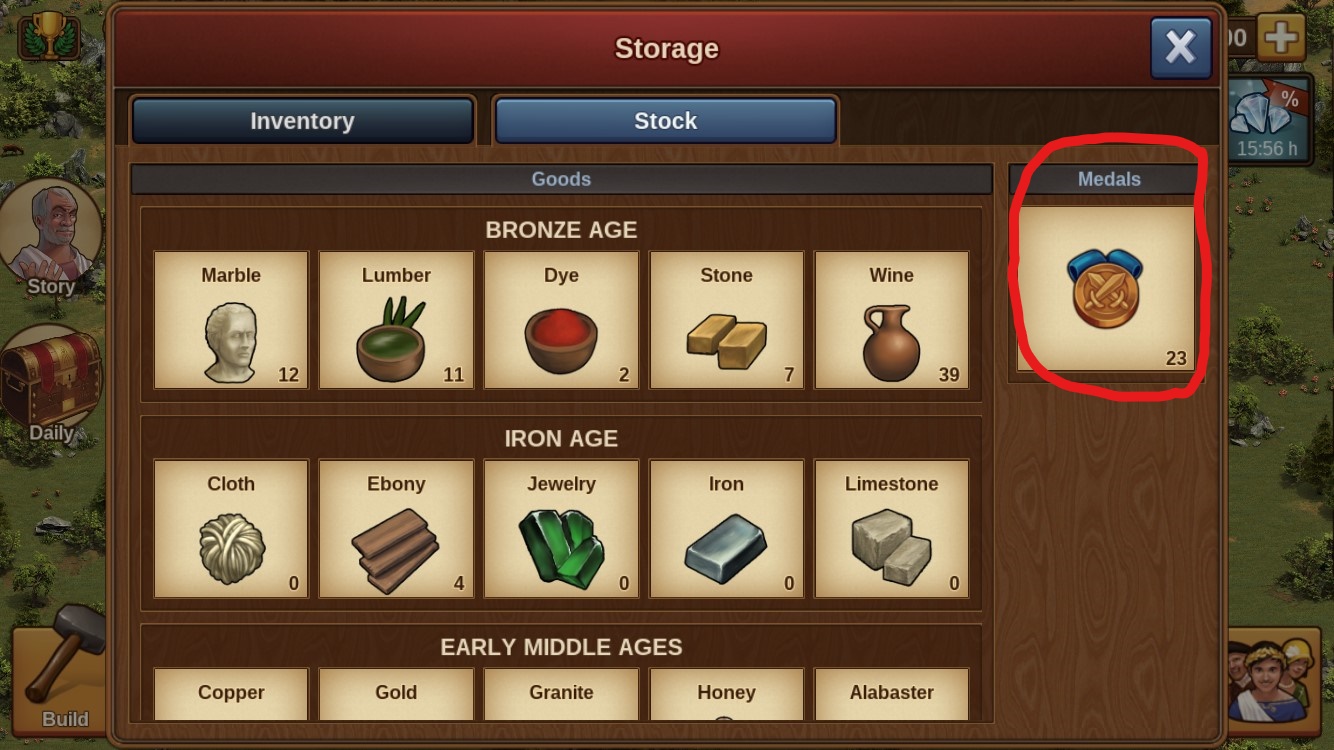
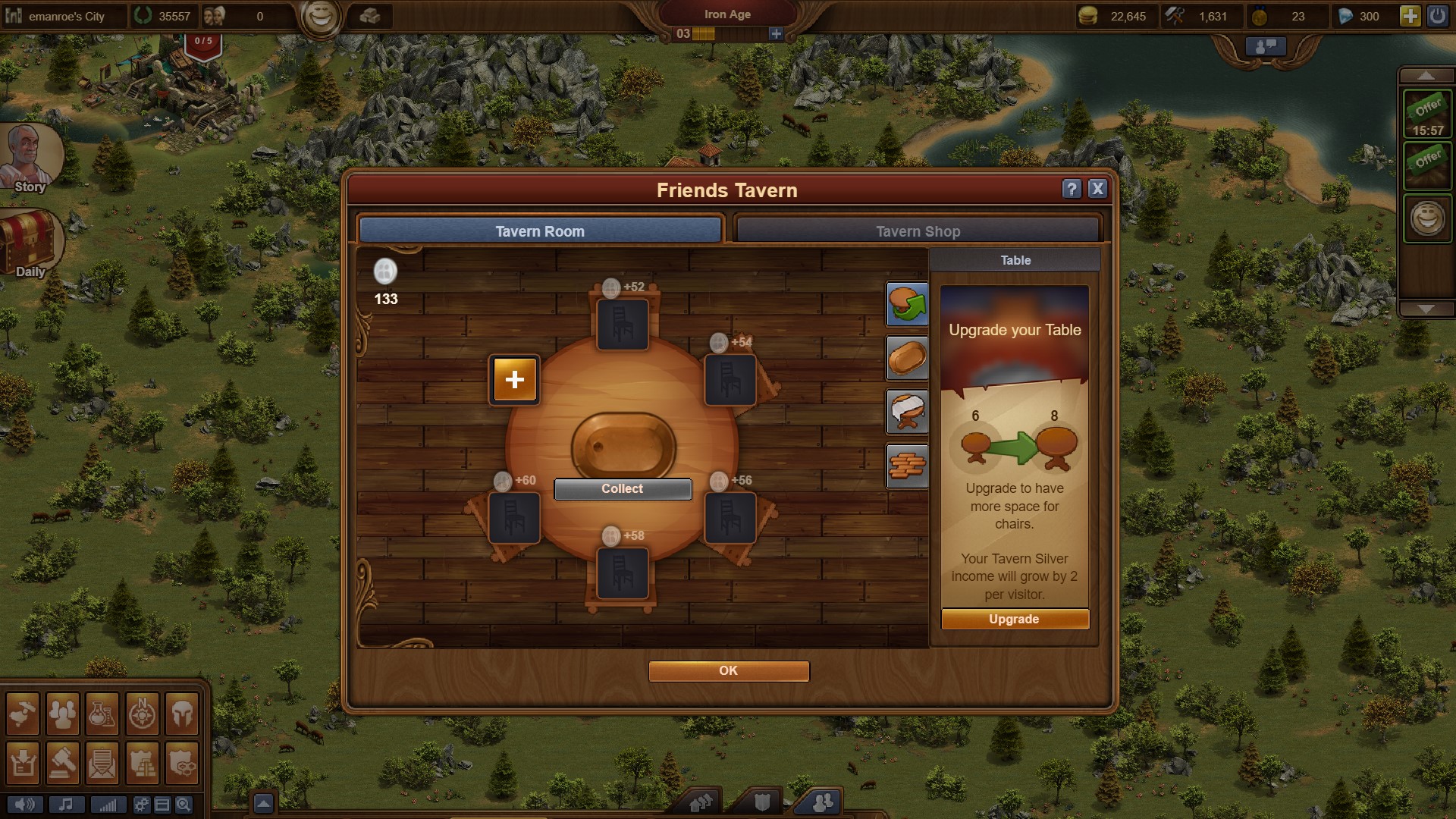
Last but not least, medals and Tavern silver. I grouped these into the last category because though they are types of currencies, I do not know much about their overarching uses. Earned through battles and treasures hidden around the empire and the surrounding area, medals are a frequent reward. Right now, I only know that they can be traded in for “reward expansions”, or additional land squared tacked on to the growing empire. I am not sure if more purposes will arise in the future so stay tuned. Tavern silver is earned in the tavern through friends sitting at your table, and infrequently as surprise rewards for sitting at other people’s tables. Tavern silver is only good in the tavern, and can be used to buy table upgrades, extra chairs, plates, tablecloths, floors, and other tavern modifications. These upgrades increase the amount of tavern silver and other bonuses players can collect from their taverns.
Progress Report:
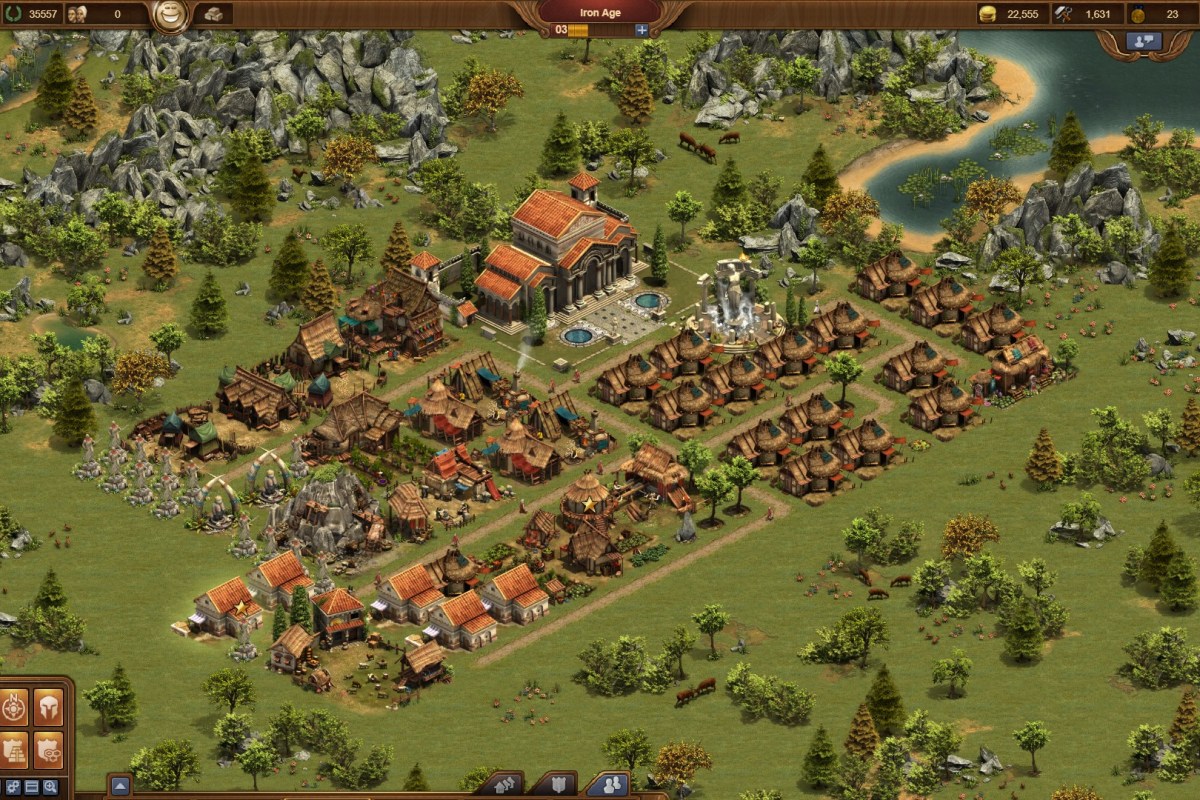
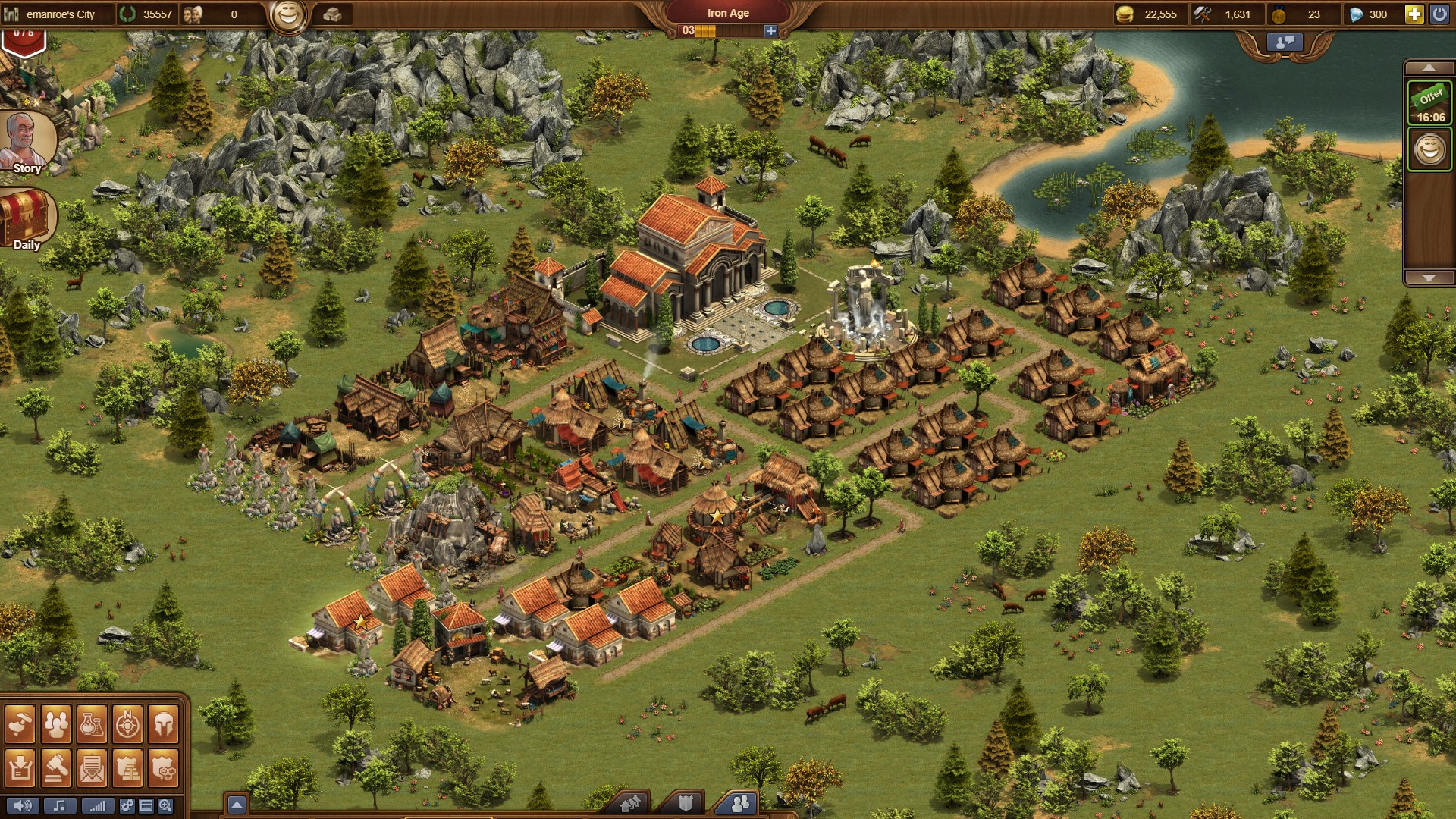
I made it to the Iron Age! This is by far my favorite headquarters yet. Between that and the new houses (in the bottom left), I am finally progressing out of the “sticks and stones” age. Next stop: exchange the current residences (chalets) for cottages. I am in the process of researching them right now, but they will increase my population by 41! In the same area!
 Emily's Blog