The tale of Forge of Empires continues! This week, I am going to break away from the actual city building and conquering (in essence, the user-driven aspects of the game) and instead dive into the stories prescribed by the game itself. I’ll start off with the ongoing storylines, which are present from the beginning of the game. Next, we’ll jump into “daily tasks”, which users unlock through research at the end of the Bronze Age. Finally, and most interestingly, I have the chance to talk about a subsidiary “event”; for the first time since I have started this game, the designers released a user-wide event that tacks on a new currency, a new set of goals, and unique prizes: the “archaeology event”.
Base Storyline
In the tutorial and early stages of the game, the base storyline is quite important. New users are able to learn different themes, features, and nuances of the game through the various directions of the story. Tasks include anything from acquiring regions to building new structures, spending forge points to producing certain goods, and anything in between. There are six main storyline characters: Ragu Silvertongue, Fernikus, General Grivus, Greva Darn, Mandrubar, and Rinbin. Though quite helpful and fun at the beginning of the game, I am now not super excited by the main storyline objectives. I think I am becoming a bit more independent with what I want to invest my time and resources into, and this does not always align with the quests. However, if the rewards are especially enticing or I happen to complete a quest through my regular actions, all the better.
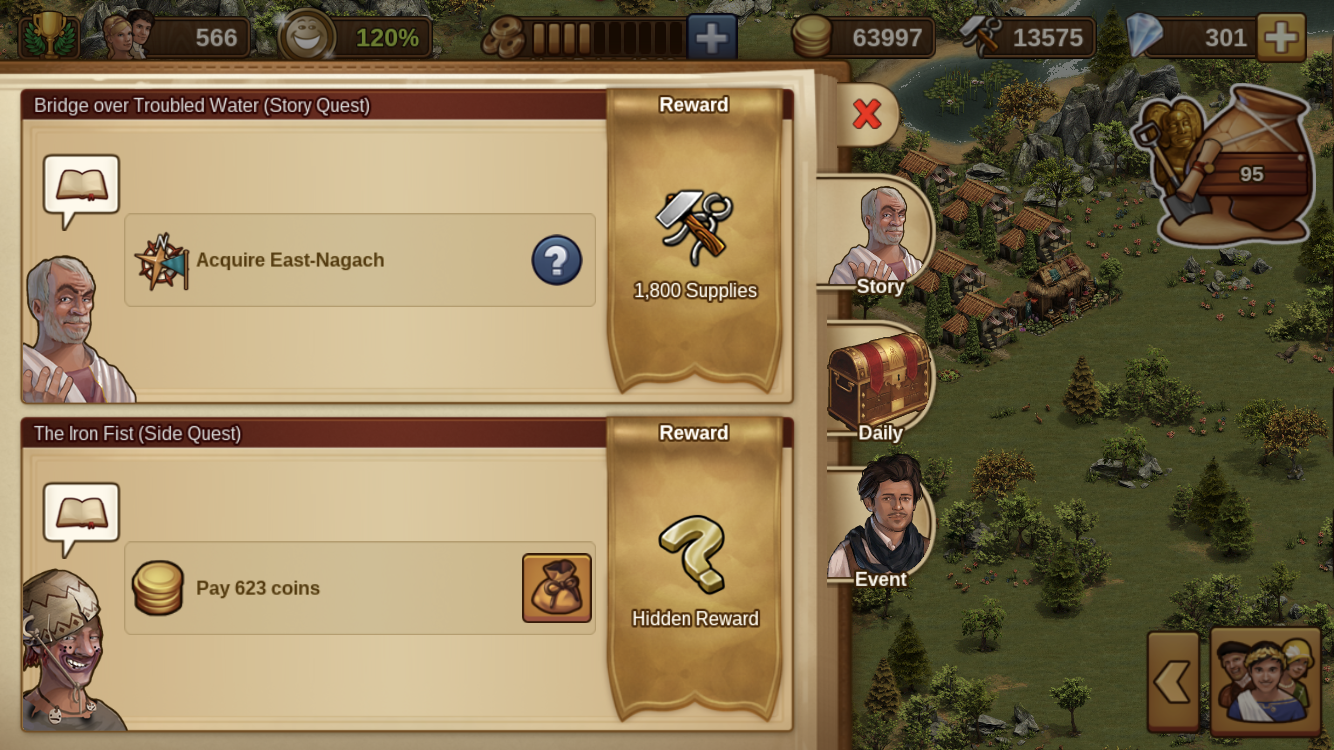
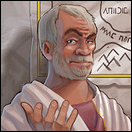 Ragu Silvertongue: Silvertongue provides the user with main story quests. He is the director of the tutorial from the moment that the game is started, and then guides the player throughout. His quests span across all disciplines, each one asking the user to engage with different aspects of the game. His objectives are the only ones that the player cannot abort, meaning that in order to progress in the main storyline of the game, the user must complete every task.
 Fernikus: Fernikus’ quests are side quests centered around constructing new buildings. Most often, these are production buildings; however, every once in a while, he will ask users to construct one or two cultural buildings. Some of the most interesting quests have recently arose since I ventured into a new age: “build one cultural building from this age OR build two cultural buildings from a previous age”. Since there is not an extensive era prior to the Bronze Age, these kinds of quests did not exist. I’ll be interested to see if/how these change as time goes on (literally).
 Greva Darn: Darn is in charge of trading, goods, and anything having to do with materials produced in the city. Some quests are good-specific and ask players to produce a certain number of dyes, wine, lumber, etc. Other quests are building or time-specific and ask players to complete a certain number of productions in a specific building type or productions that take a certain amount of time. Her quests are often pretty easy to complete.
 General Grivus: Mr. Trojan has a real name! I must admit, however, that I am disappointed in his lack of resemblance to his namesake. If you’re going to name a character so close to the Supreme Commander of the Separatist Droid Army, he has to have some homage characteristic. General Grievous had four lightsabers (among other weapons), so I feel like Mr. Trojan/General Grivus needs more than just a helmet. Anyways, Star Wars (Episode III) tangent over.
General Grivus is in charge of military side quests. These include recruiting new units, acquiring new regions, or scouting a new province. His quests are a bit less frequent, but I am not sure if this is unique to my gameplay. I do not do a lot of conquesting in the map, so I may not spawn these tasks as frequently.
 Mandrubar: I think Mandrubar is my favorite. He is the scientist: sponsor of research and spending forge points. His smug smile is quite endearing, and his quests are relatively easy and fun. He has a bit of an Aristotle/Plato/Socrates thing going for him in his new Iron Age getup, which I quite enjoy. That aside, he appears every once in a while with side quests and rewards for new research and spending forge points, which can only be spent towards research or Great Buildings.
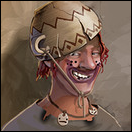 Rinbin: I am 100% positive that Rinbin is going to evolve into a jester. His mischievous, slippery appearance is equal parts charming and deceitful. He brings oddball quests that are a similar range to as Ragu Silvertongue, but exponentially stranger. He also accepts coin trades, which are currently pretty low in value, but I am expecting that to change down the road. His rewards are my favorite part of his character, however: unlike the others, he gives “hidden rewards”. This means that the player does not actually know what they are getting in return for their efforts.
Image credits: https://forgeofempires.fandom.com/wiki/… Ragu_Silvertongue, Fernikus, Greva_Darn, General_Grivus, Mandrubar, Rinbin.
Daily Tasks
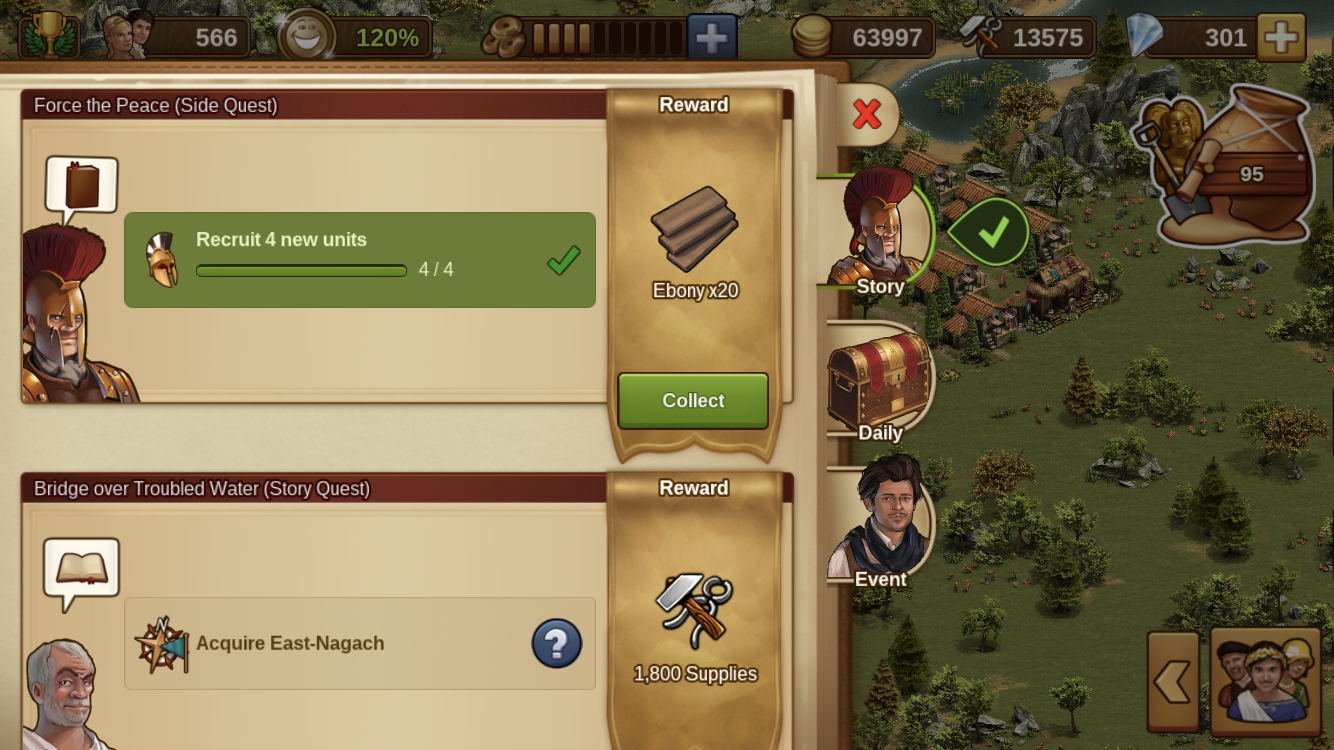
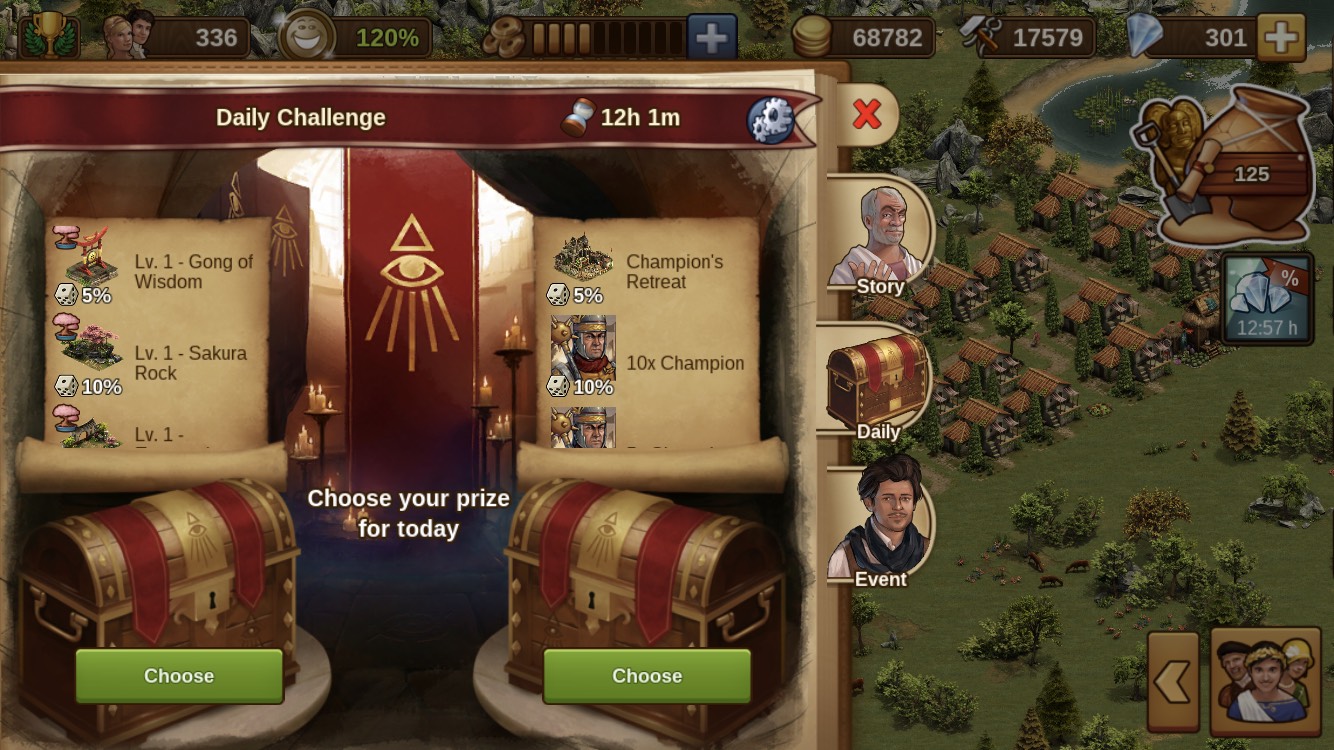
Unlocked at the beginning of the Iron Age by researching “militia” (any thoughts on the correlation here? I’m at a loss), daily tasks are a somewhat-new addition to the game. In all honesty, I am moderately unimpressed. Every 24 hours, the game presents players with a choice of two chests. Each chest contains a reward that users will receive if they complete the tasks affiliated with the chest, but there are two catches: 1) the user does not know what the tasks are prior to choosing the chest and 2) the chests contain multiple possible rewards, listed by probability. This means that a chest could yield 100 forge points, but there may only be a 5% chance of this happening. On the other hand, there is a 55% chance that the user will receive 10 forge points.
Once the user chooses a chest, they are presented with the tasks needed in order to unlock a prize. The key word here is tasks. Multiple tasks. Now, remember: the user only has 24 hours to complete these tasks, starting at the beginning of the day, not when the chest is opened. Therefore, if you set your tasks to rollover at 8am, you have from 8am one day until 8am the next day to complete the tasks, even if you didn’t choose a chest until 1pm. Esto es tu culpa.
Like I said, not my favorite aspect of this game.
Archaeology Event
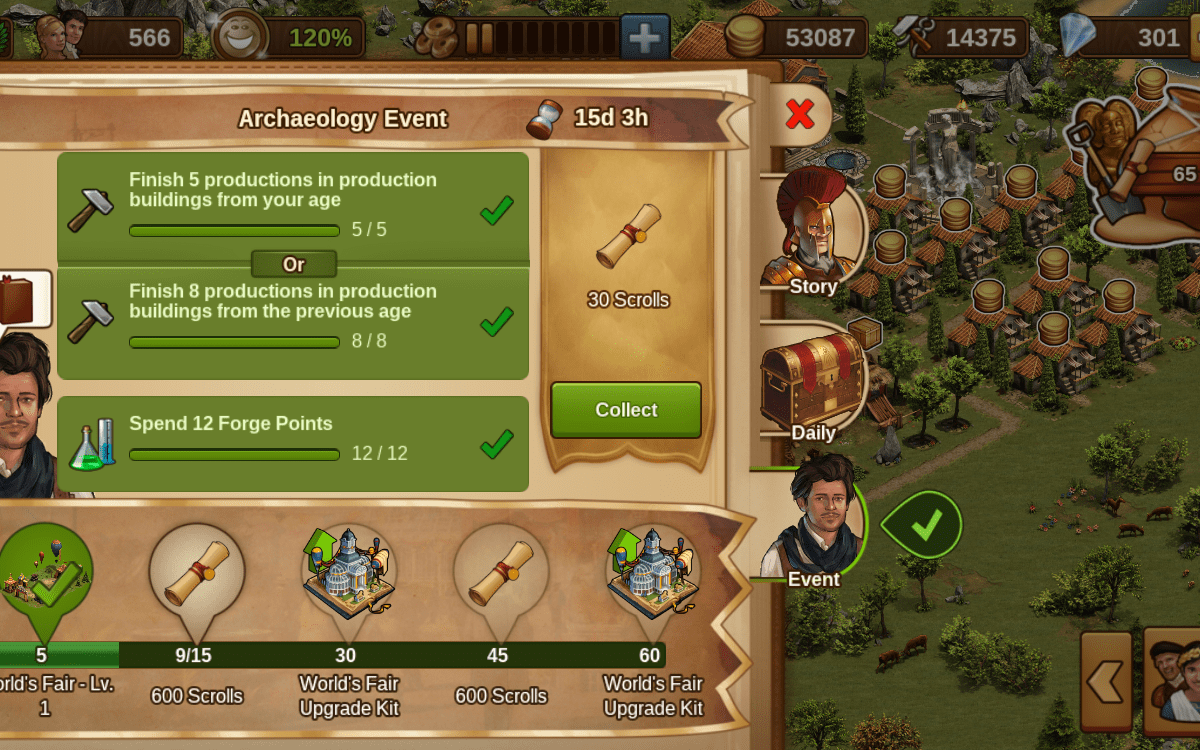
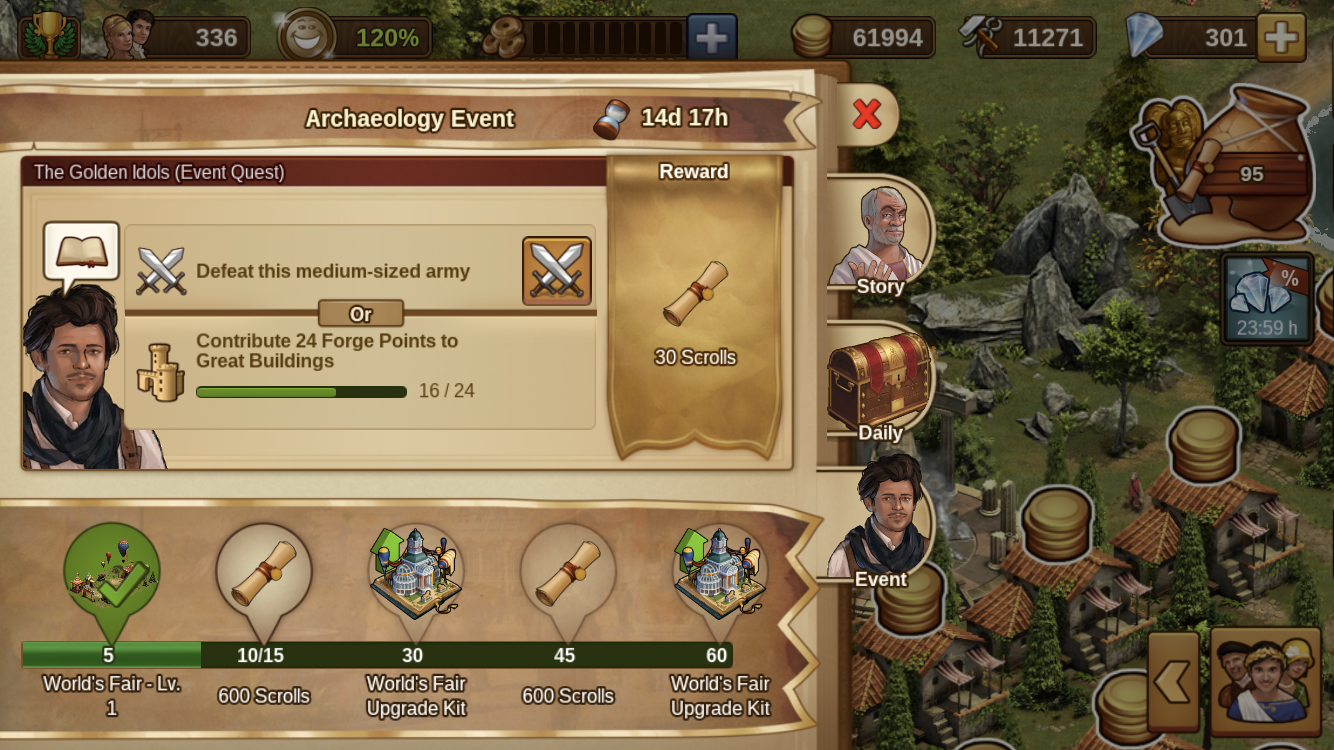
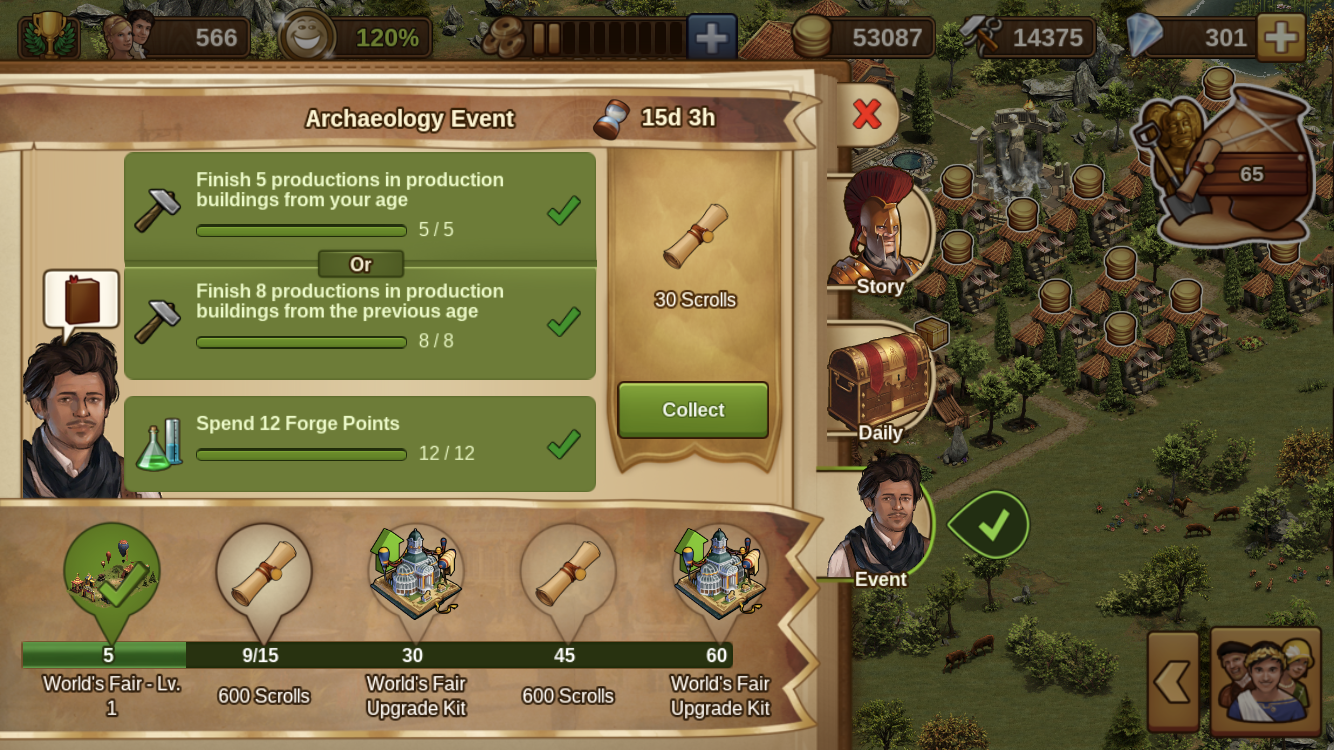
The newest, and my current favorite, objective-driven feature is the Archaeology event. Starting on the 2nd of May, Forge of Empires released a month-long event that brings a new currency (scrolls), objectives, and exclusive prizes. Users can collect scrolls on a 24-hour time basis as well as through quests provided by Edward, the event coordinator (similar to Ragu Silvertongue). Completing tasks not only earns scrolls, but each task completed counts towards a total ticker bar that yields larger rewards. After 5 successfully-completed objectives, users unlock a level 1 World’s Fair: a 6×4 residence building that holds 383 people and creates 2,200 coin per day. After 15 and 45 tasks, the player receives 600 scrolls; after 30 and 60 tasks, the player receives a World’s Fair upgrade kit. Upgrade kits can be used to increase the number of people and amount of revenue that the World’s Fair generates: a level 2 Fair holds 418 people and generates 2,300 coin per day, a level 3 Fair holds 452 people and generates 2,500 coin per day, and the highest level Fair (level 10) holds 696 people and generates 3,500 coin per day.
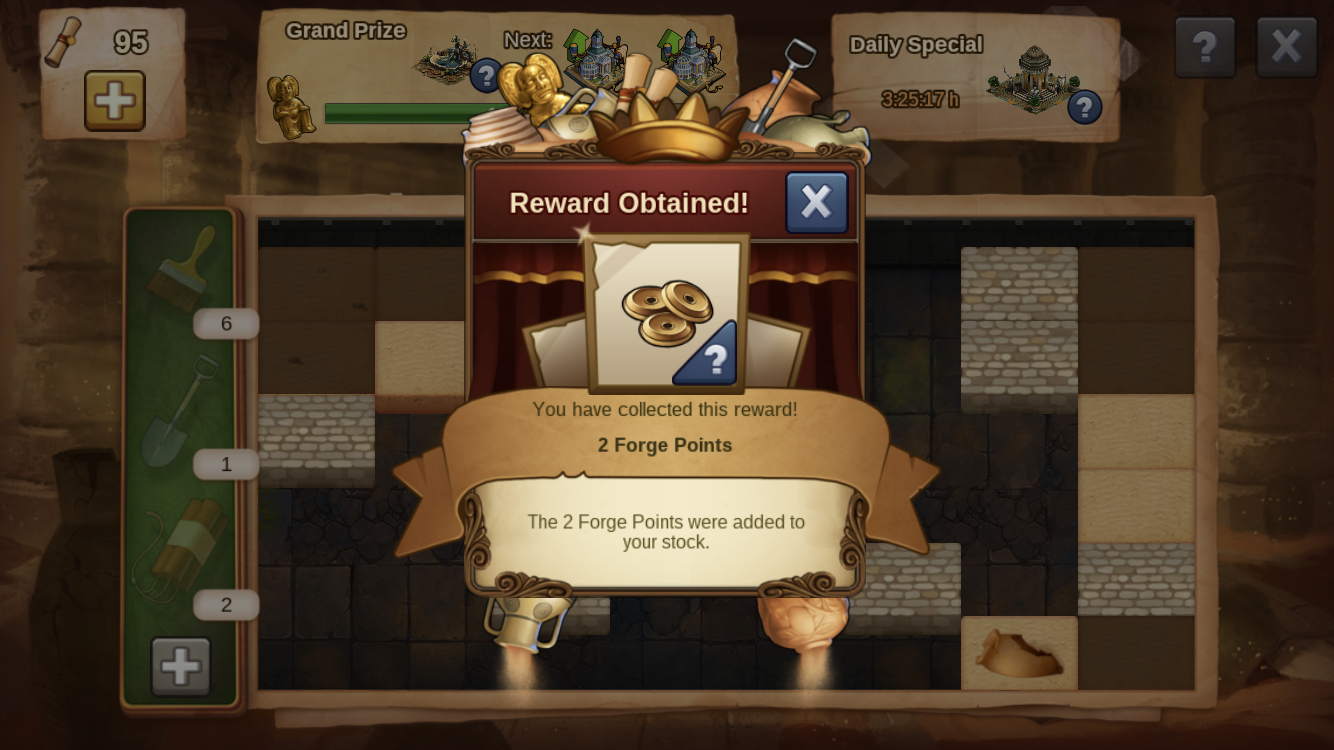
Scrolls can be used to buy more archaeology tools, such as brushes, shovels, and dynamite. These tools are used to clear sand tiles in the archaeology module. Brushes clear single tiles; shovels clear rows of tiles but can only be used on blank spaces and are stopped by rock tiles; dynamite clear a box of 8 tiles but, like the shovels, can only be used on blank spaces. Users can purchase individual tools: brushes are 10 scrolls, shovels are 35 scrolls, and dynamite are 50 scrolls. Conversely, players can buy packages of tools: 7 brushes, 3 shovels, and 2 dynamite for 180 scrolls or 20 brushes, 8 shovels, and 8 dynamite for 330 scrolls. It is most cost-effective to buy this last pack, but it also takes a while to accumulate this many scrolls.
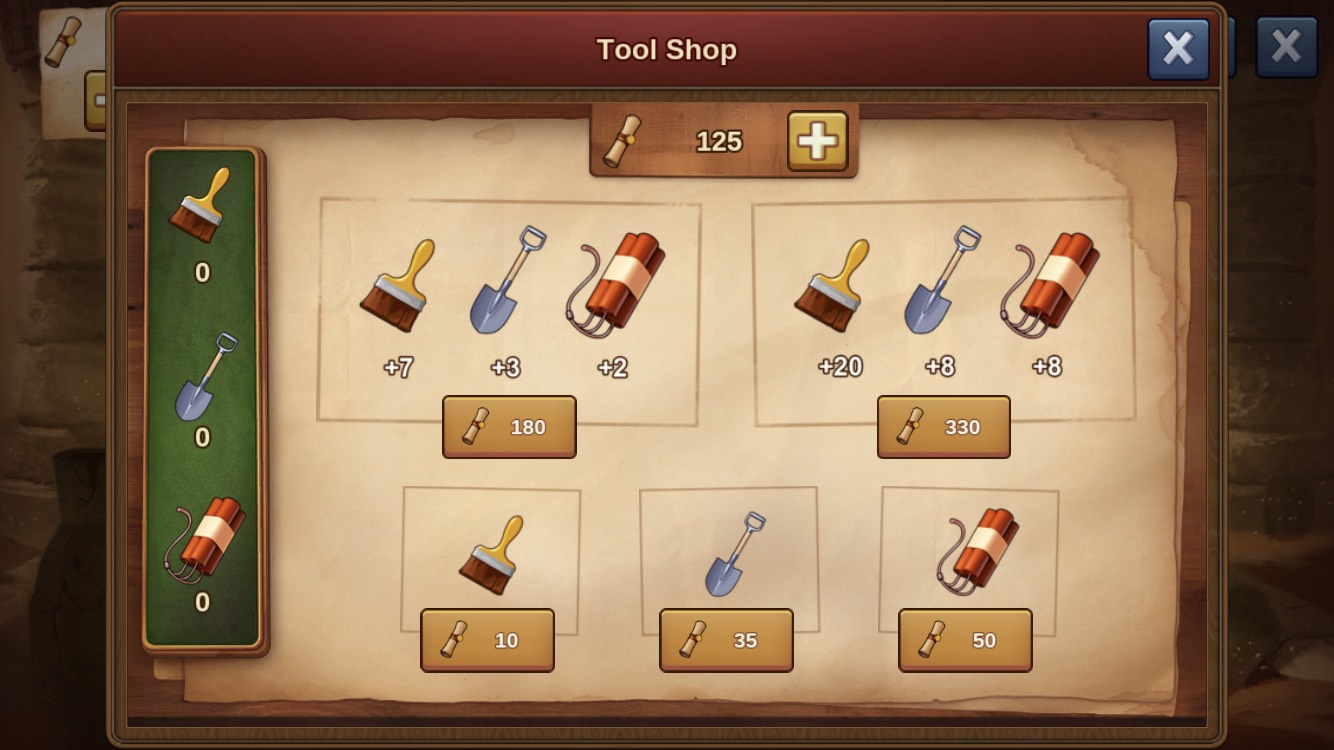
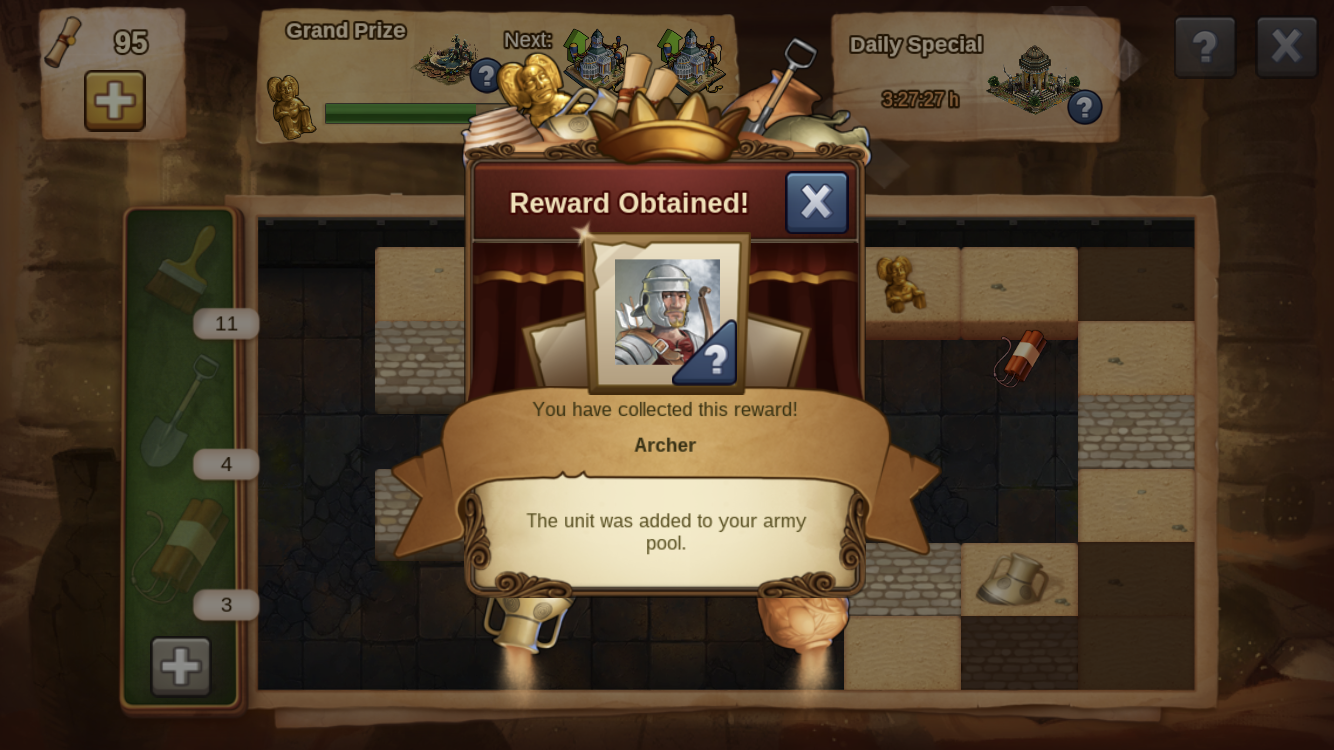
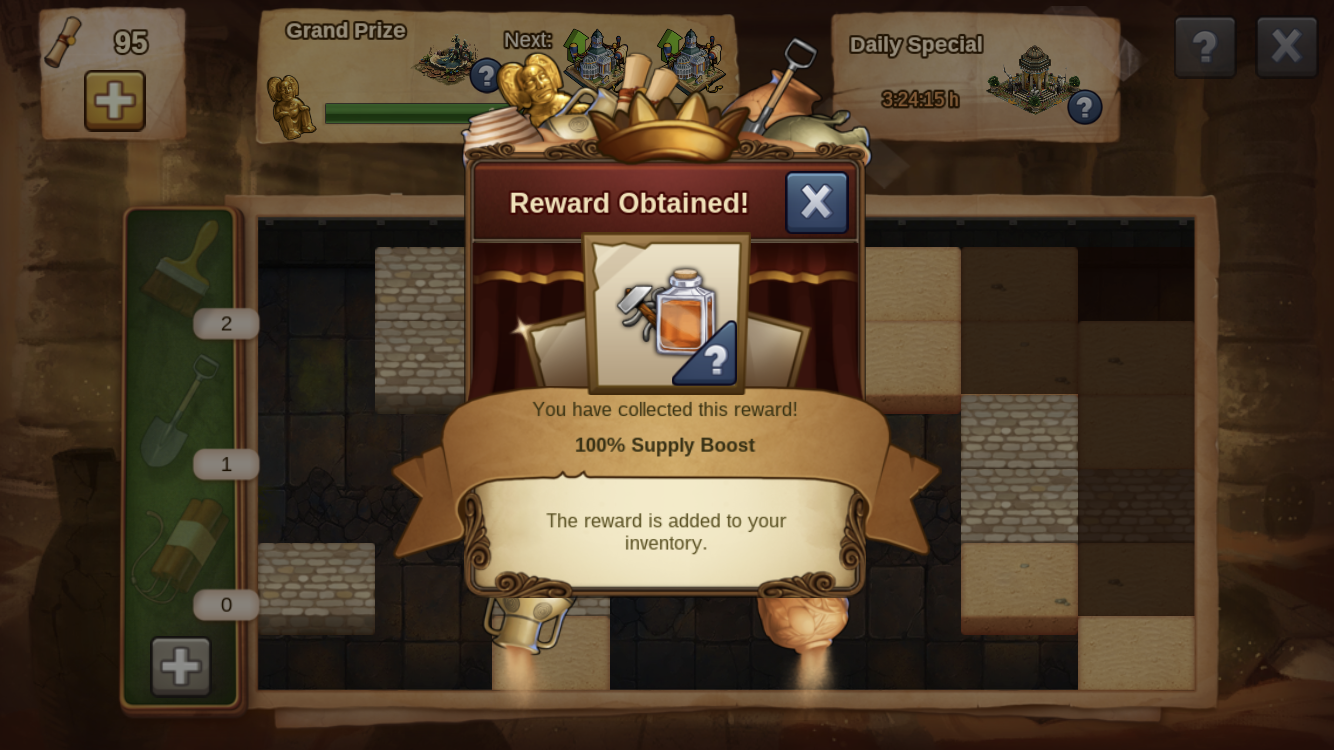
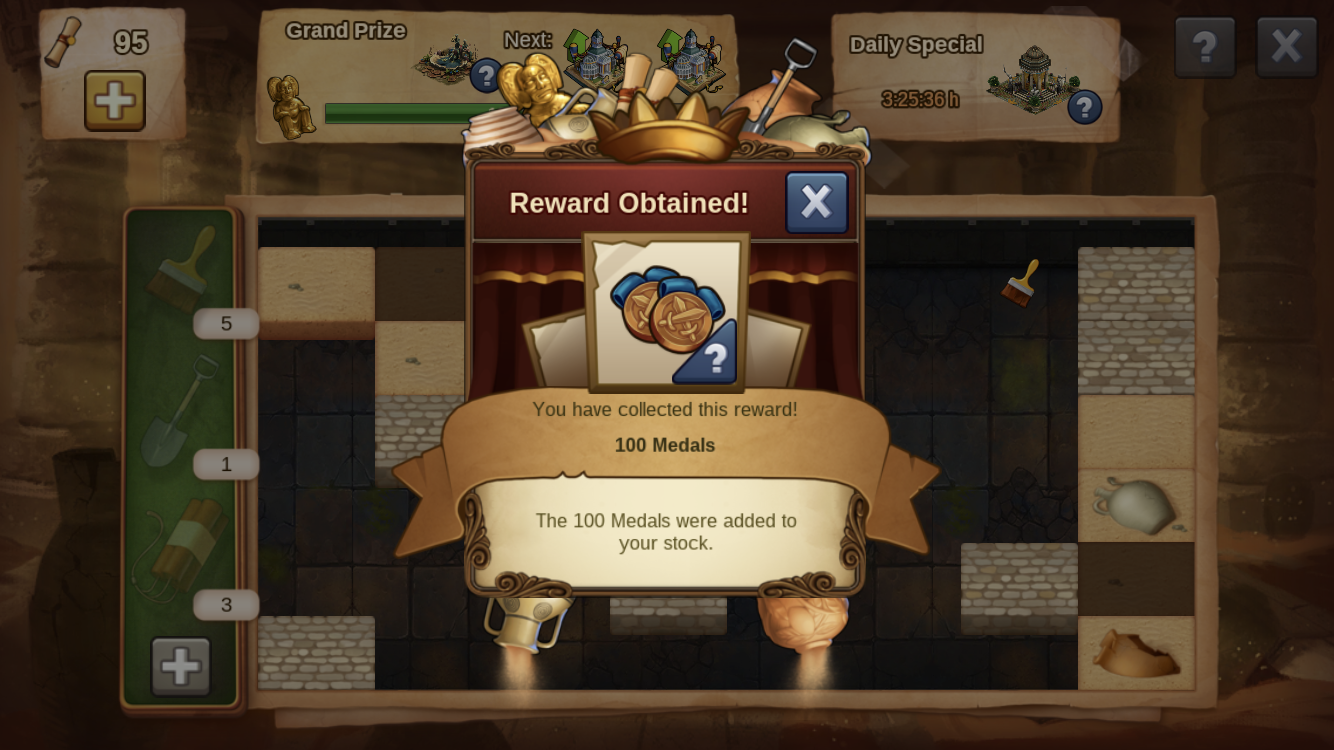
Tiles can contain more tools, Golden Idols, or pots that contain rewards. The Golden Idols are collected and count towards large prizes, like wishing wells and World’s Fair upgrade kits. Pots are similar to daily rewards chests in that they do not definitively tell the player what is inside; instead, they host a series of possible rewards with associated probabilities of discovery. These rewards can include forge points, Golden Idols, military units, medals, boosts, coin or supply rushes, and even rare “daily specials” (special buildings that yield larger and more lucrative rewards for the city).

Progress Report
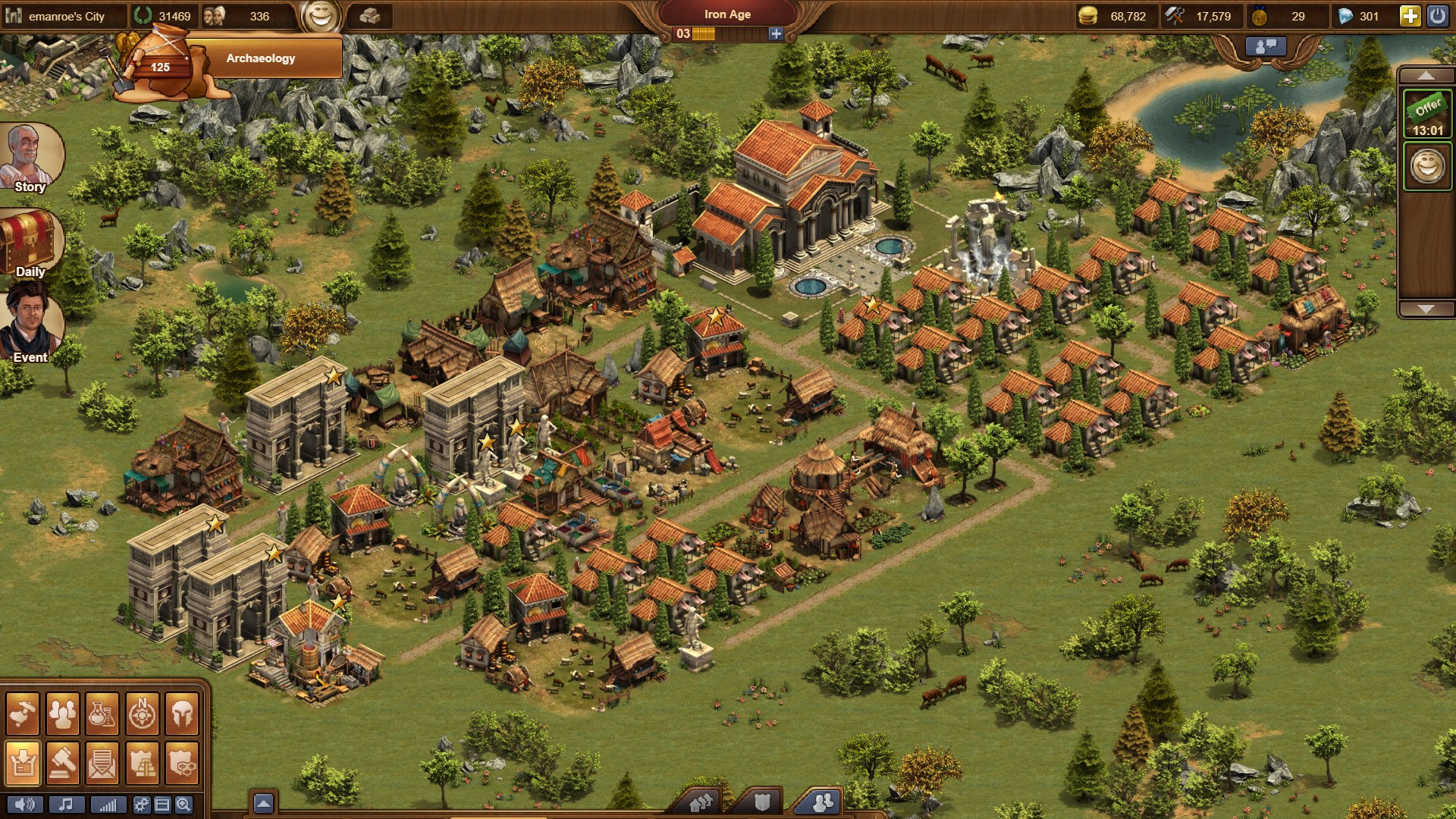
All houses are now cottages! Hooray! I also built three new triumphant arches (cultural buildings) so I am sure that my population will always be producing at a 120% level. I also built my first production building of the Iron Age: coincidentally, it is the iron foundry! I also added another goat farm, which has increased my production of supplies dramatically. I do not have as much of an issue with supply shortages, which is quite exciting.
 Emily's Blog