
Mirra, Morrell, and Filipiak explore how digital media literacy in an education setting needs to transform for a static, informative, and often defensive view into a suite of critical “multiliteracies”. These multiliteracies include students’ abilities to consume, produce, distribute, and invent digital content; Mirra, Morrell, and Filipiak’s focus on the critical senses of these literacies stress that students engage, think, and actively construct these literacies instead of accessing digital content passively. Another aspect of this active and constructive engagement with digital media incorporates ideas of inclusivity, representation, and equality among social and economic groups. These ideas are highlighted in both the Mirra, Morrell, and Filipiak article as well as the Degand article; the Degand article goes on to explore how cultural, racial, sexual, and other representativeness within digital art provides students with the ability to critique and counteract biases in these areas. Degand also addresses the idea that the education of art in and of itself requires diverse cultural and gender aspects in order to ensure that the products created are equally as representative of all groups. Halverson’s TEDx Talk discusses a similar idea through the connection between tools and production, showing that students create art to the extent that their instruction and materials allow. Halverson also presents a corresponding idea surrounding the production of digital art and media as a representation of self and identity, exploring how students are able to build their self-image through artistic expression. Furthermore, Halverson also hits on the concept that digital media in education leads to increased innovators and creators in the 21st century world; this idea is similarly addressed in the other two texts by Degand and Mirra, Morrell, and Filipiak.
One aspect of these resources that really spoke to me were the various sections regarding the awareness of marginalized representation in digital media access and production. I grew up in a small town along the US-MX border in Southern California. My high school is a Title I-designated school, meaning the overwhelming majority of my school is low-income. Over 98% of the student body is Hispanic/Latino/Chicano, and the main language heard in the halls is Spanish. There are brilliant minds walking through those halls, but unfortunately, we do not have access to the same resources or opportunities that other, socioeconomically-advantaged schools have. While reading these articles, I felt a strong connection to the areas that addressed this dissonance between ability and access; these students have a vast arsenal of cultural and personal experiences that they want to share with the world, but simply lack a voice in the major media sectors. Not only that, but their voices would have the ability to help combat the lack of diverse perspectives or overreaching stereotypes that surround communities like mine. Using the strategies proposed by these aforementioned resources, I see a snowball effect of increased diverse production, increased diverse consumption, increase awareness, increased action, increased access, and thus further increased production, consumption, and so on.
Building from this idea, a question that I would pose to my peers would be the following: What do you think would be the most successful way to start a widespread action plan to increase diversity in digital art education? Administrative trainings to combat reprimands from conservative supervisors? Teacher trainings to increase tool arsenals and pedogeological approaches? Student-centered programs or advertising to increase enthusiasm and interest? Community-based programs and outreach to increase parent and communal support?
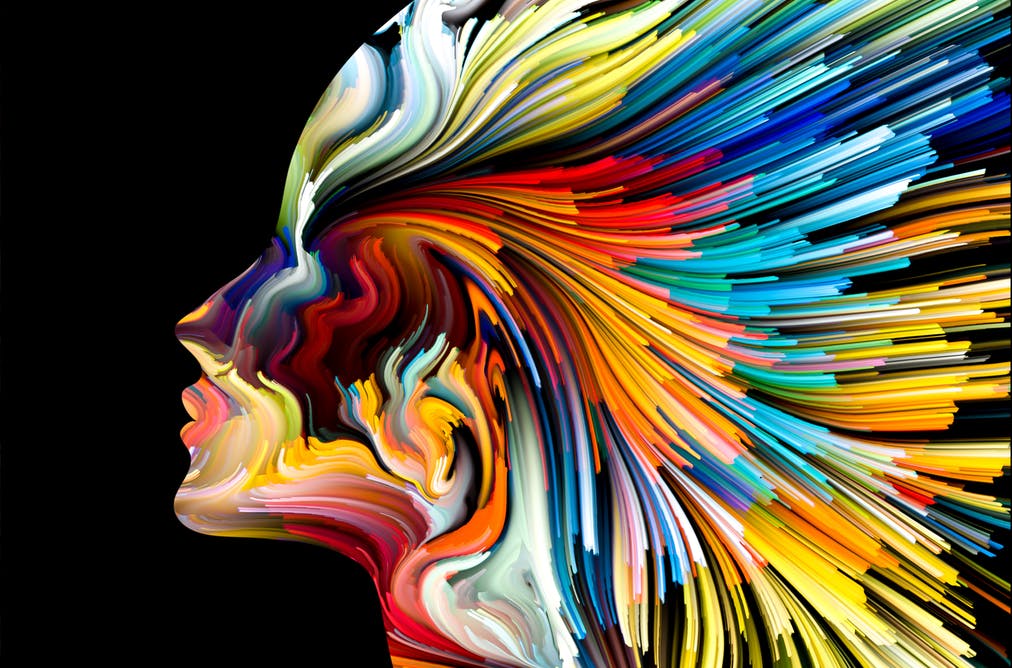
Image credit: Art, Creativity, and Manifesting Your Prowess [JPG]. 2018. Retrieved from https://wakeup-world.com/2018/02/01/art-creativity-and-your-manifesting-prowess/.
 Emily's Blog
I think student-centered programs would be a great way to start implementing more digital media education. Training teachers alone does not guarantee the effectiveness of their teaching methods; there needs to be sufficient interest and curiosity among the students, so that they’re willing to learn more about digital media arts. One way to jumpstart this process could be to introduce young children (in an elementary school) to educational video games and other interactive material on a computer, so they can learn what it feels like to engage with digital media in a productive way.
LikeLike
I had similar opinions on the main idea of each of the articles and it was very well said. As I was reading your response, I was thinking about how opportunity is a very important in ones “success” as Malcolm Gladwell in the book Outliers broke down how some of the successful entrepreneurs had the opportunity to use the computers in their college or was able to afford it. I also thought back to my Chicano Studies class where sometimes the oppressed are purposely held back stay in this cycle so they are not able to break out of the cycle.
To address your question:
I think that to increase diversity in digital art education starts with teachers and school because I think that younger kids will be more willing to try it because everything will be new to them while older kids such as in high will do the way that tends to be more comfortable for them such as traditional methods. I know that for me, I sometimes would rather stick to something that I am more familiar with such as traditional methods than to try something new because I am a lot more comfortable with it. I think that family also has to emphasize digital arts too because parents can be a big influence on their children. I think that “teacher training to increase tool arsenals and pedogeological approaches” will also be beneficial to help teachers know how to start, but I also believe that teachers will follow their traditional because they are more comfortable with their traditional methods because that is the way they learned. Offering advertising and community-based programs will bring more attention to digital art education, however, I think it won’t be enough to reach the broad audience. However, one of the problems I see with trying to diversify digital art is that not everybody has equal access to the resources and tools needed to learn or access these arts. Once again, the unfortunate ones are stuck in this cycle are being deprived of diversity in digital art education because of the lack of resources. The students and teachers must also be passionate and want to learn about digital art. It will be a long gradual process that allows society to adjust to it. I think the best way is to emphasize digital art education to the new generations because it will be hard to completely change the minds of the current generation. No matter how hard we advocate for digital media art, if people do not want it themselves, it will not work.
LikeLike